Prince Andrew Legal Challenge Over Police Search Warrants
 Published By
Jermaine
Published By
Jermaine
Published:
Updated:
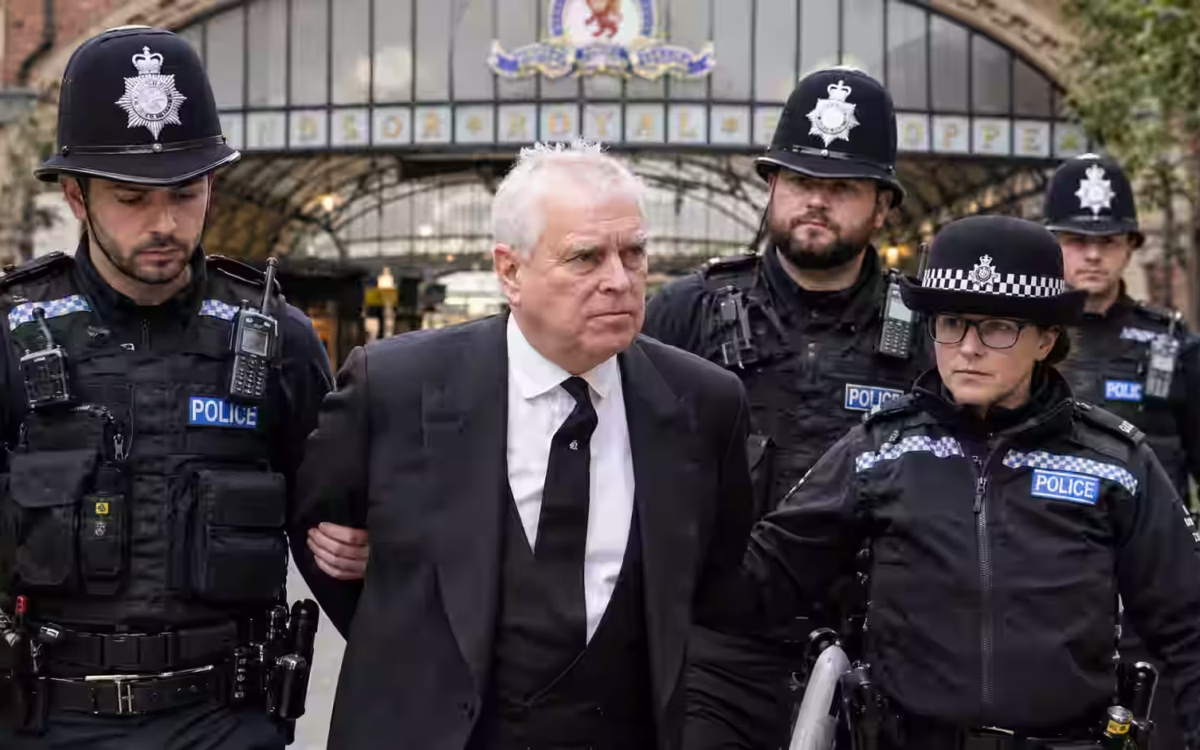
Andrew was arrested on 19 February, his 66th birthday, on suspicion of misconduct in public office.
The investigation followed allegations concerning whether sensitive government information was shared with the late convicted sex offender Jeffrey Epstein while Andrew served as the UK’s special representative for international trade and investment.
Andrew has consistently denied wrongdoing in relation to Epstein and has previously expressed regret over their association. He has not been charged, and Thames Valley Police’s investigation remains ongoing.
The force confirmed ahead of the High Court proceedings that it remained involved in litigation concerning warrants previously obtained from the Central Criminal Court.
“Whilst our investigation into misconduct in public office continues, we are engaged in legal proceedings in relation to warrants previously obtained from the Central Criminal Court,” Thames Valley Police said.
Police searched properties associated with Andrew following his arrest, and investigators seized material during the operation. He was questioned for hours before being released under investigation.
Why Is Andrew Challenging the Police Searches?
The central question in Andrew’s judicial review is whether Thames Valley Police lawfully obtained the warrants authorising those searches.
Exactly what arguments his legal team intends to rely upon have not yet been disclosed publicly.
That is one reason today’s document-access hearing matters.
Court documents could potentially reveal substantially more about the grounds on which Andrew says the warrants should be quashed.
Thames Valley Police, however, is seeking restrictions on access to at least some of those materials because of the possible implications for its continuing criminal investigation.
It is therefore important to distinguish between three separate issues.
Andrew is challenging the search warrants; the court has not determined that the searches were unlawful; and a successful judicial review would not necessarily bring the police investigation itself to an end.
Nick Vamos, a partner at law firm Peters & Peters who is not involved in the case, told Reuters that even if a problem were identified with the original warrants, that would not necessarily deprive investigators of everything seized.
He said that
“if that can be remedied then the Crown Court may simply allow the police to keep hold of all the material anyway”
That point could become crucial.
A successful challenge to the legal basis of a search warrant does not automatically mean the entire underlying investigation disappears.
The practical consequences would depend on what the High Court finds was wrong, the material involved and what subsequent legal remedies are available.
Former Metropolitan Police officer Graham Wettone has offered a different perspective on the potential impact.
He said Andrew was “effectively trying to challenge the evidence” obtained through the searches and suggested that a ruling against the warrants could complicate the investigation.
Wettone also described the wider inquiry as a lengthy and complex one involving potentially large numbers of witnesses and documents.
That helps explain why Thames Valley Police is seeking restrictions on the disclosure of material while its criminal investigation remains live.
Legal Move Described as a ‘Risky Strategy’
Andrew’s decision to challenge the police has also attracted attention far beyond the technical question of whether warrants were properly issued.
Alisa Anderson, who served as Queen Elizabeth II’s press secretary, described the move as “absolutely extraordinary” and said it represented “a risky strategy, especially if he doesn’t win”.
She said Andrew was clearly acting after receiving legal advice but argued that launching such a public challenge created substantial reputational risk.
The proceedings arrive after years in which Andrew’s position within the Royal Family has dramatically changed.
He withdrew from public royal duties in 2019 following controversy over his relationship with Epstein.
King Charles later removed his remaining titles and honours, and Andrew now lives at Marsh Farm on the Sandringham Estate rather than Royal Lodge.
The current police investigation is separate from the civil case previously brought against him by Virginia Giuffre, which was settled without an admission of liability.
The present issue is whether there was potential misconduct in public office connected with Andrew’s previous government-linked trade role.
The allegations have not been proved, and Andrew has not been charged with a criminal offence.
Buckingham Palace has meanwhile sought to distance King Charles from his brother’s latest legal strategy.
A Palace source has said that private money provided by the King to support Andrew should not be used to pay for the judicial review.
The proceedings are being treated as a personal matter for Andrew and his lawyers rather than something involving the Royal Household.
That distinction is politically and constitutionally important because the case places a member of the King’s immediate family in direct legal conflict with a British police force.
When Andrew was arrested in February, the King’s position was that the legal process should be allowed to run its course.
Today’s hearing therefore creates an unusual situation: the King’s younger brother is using the courts to challenge investigative steps taken by police while the same criminal inquiry remains active.
For people searching for the latest developments in the Prince Andrew legal challenge and police search, the most important point on Thursday morning is that the High Court has not yet ruled on whether the search warrants were lawful.
Today’s 2pm hearing is initially about whether documents connected with Andrew’s judicial review should remain restricted from public access.
The substantive attempt to quash the warrants continues separately.
If Andrew eventually succeeds, attention will immediately turn to what that means for material seized from Sandringham and Royal Lodge and whether investigators need to seek fresh judicial authority.
If he loses, his legal intervention could instead reinforce scrutiny of why he pursued the challenge in the first place the risk highlighted by Anderson.
For Thames Valley Police, the broader investigation continues regardless of today’s document-access dispute.
For Andrew Mountbatten-Windsor, however, the High Court proceedings represent his most significant legal attempt so far to challenge how that investigation has been conducted.
This story is developing and reflects information available on the morning of 8 October 2026, before the 2 pm High Court hearing.
About the Journalist
Jermaines covers crime, legal affairs and money-related stories for Londoner. His reporting includes police updates, court cases, consumer rights, personal finance and cost-of-living issues. He handles sensitive subjects carefully and clearly distinguishes confirmed facts from allegations, estimates and ongoing investigations.