Store Water and Tinned Food to Prepare for Emergencies, UK Citizens to Be Told
 Published By
Ben
Published By
Ben
Published:
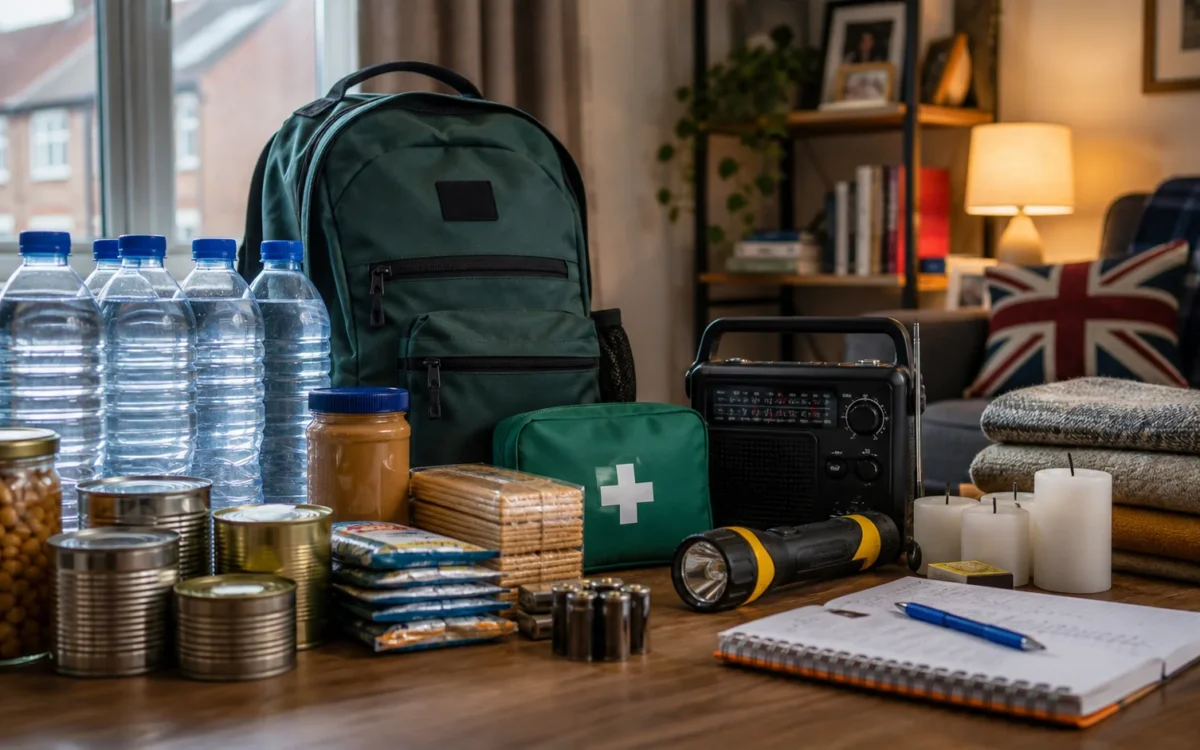
Table of Contents
UK households are set to be encouraged to keep bottled water, tinned food and other essential supplies at home as part of renewed government efforts to improve the country’s preparedness for major emergencies.
The planned public information campaign will focus on helping households cope with disruption caused by events such as extreme weather, lengthy power cuts, water outages and cyber attacks.
The move comes as ministers step up work on Britain’s national resilience plans amid growing concerns about hostile states, attacks on critical infrastructure and increasingly severe weather.
Why Are UK Citizens Being Told to Store Water and Tinned Food?
Government officials reportedly want households to become more self-sufficient during the first stages of an emergency.
Having basic supplies at home could allow emergency services and local authorities to prioritise vulnerable people while other households manage temporary disruption independently.
Advice is expected to include keeping items such as:
- Bottled drinking water
- Ready-to-eat tinned food
- A manual tin opener
- Torches and spare batteries
- Portable phone chargers
- Essential medication
- Basic first-aid supplies
- Battery-powered or wind-up radios
Existing UK emergency guidance already recommends considering enough supplies to cope with disruption lasting several days.
For drinking water, current preparedness advice says a minimum of around 2.5 to 3 litres per person per day may be required for survival, while larger quantities may be necessary when cooking and basic hygiene are included.
Is the UK Preparing for War?
The announcement does not mean the Government expects an immediate attack on Britain.
Instead, ministers are reviewing how the country would respond to several types of major disruption.
Work is also being accelerated on updating the Government’s so-called “war book”, which covers how civilian authorities, emergency services and the military could coordinate during a serious national crisis.
Recent concerns surrounding cyber attacks on infrastructure and geopolitical tensions have increased the focus on national preparedness.
When Will the Emergency Preparedness Campaign Begin?
A precise nationwide launch date has not yet been confirmed.
The campaign is expected to use public information and social media to explain practical steps households can take without encouraging panic buying or unnecessary stockpiling.
The message is expected to focus on reasonable household preparedness rather than building large emergency reserves.
For London households, where storage space can be limited, keeping a small selection of bottled water, long-life food, medication, a torch and a portable charger could provide a basic emergency supply without requiring significant space.
About the Journalist
Ben covers business, transport and global developments for Londoner. His reporting focuses on London’s economy, major companies, infrastructure, public transport and international stories that may affect people and businesses across the capital. He explains complex developments clearly using reliable sources and relevant context.