France and Germany Back UK In New Industrial Legislation Deal As EU Manufacturing Rules Take Shape
 Published By
Olivia
Published:
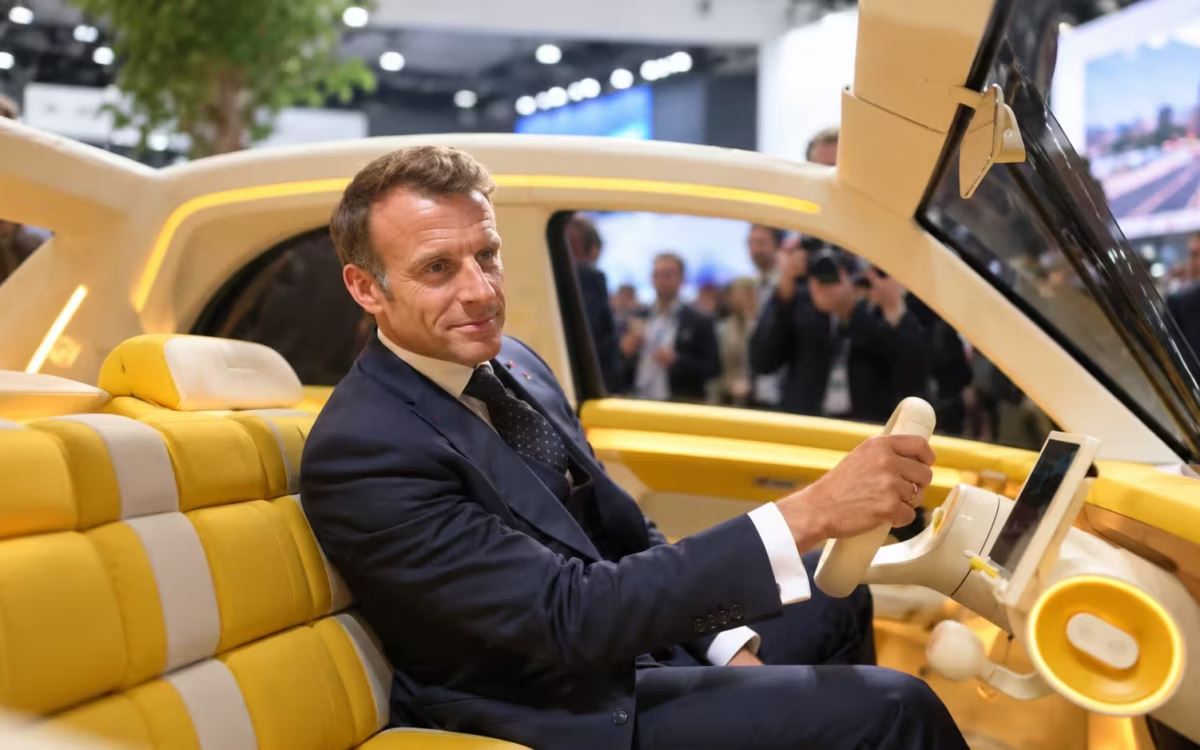
France and Germany have reached a major agreement on European industrial legislation that could allow British car manufacturers to benefit from the European Union’s proposed “Made in Europe” rules, marking a significant development in post-Brexit trade relations.
The breakthrough, confirmed on Friday, 16 October 2026, follows weeks of disagreement over whether the UK should qualify for preferential treatment under the EU’s Industrial Accelerator Act, legislation intended to protect European manufacturing, encourage investment and strengthen competition with China.
French President Emmanuel Macron and German Chancellor Friedrich Merz have now agreed on a compromise that would potentially give Britain trusted-partner status in the automotive sector, provided the UK accepts certain European trade conditions.
The agreement represents a shift in France’s position. Paris had previously resisted extending European manufacturing preferences beyond EU member states, while Germany argued that excluding Britain could damage automotive supply chains spanning both countries.
However, the development does not mean the UK has automatically secured access to the scheme. The Franco-German proposal still requires wider European approval, and important questions remain about Britain’s approach to Chinese electric vehicle imports.
The Industrial Accelerator Act, originally proposed by the European Commission in March 2026, covers strategic industries including automotive manufacturing, steel, cement, aluminium and clean technologies.
Its central objective is to encourage European production by introducing manufacturing-origin and low-carbon requirements for certain publicly supported projects, procurement contracts and subsidy programmes.
For British businesses, the concern has been that vehicles and components manufactured in the UK could lose access to important European incentives despite being part of highly integrated international production networks.
The latest agreement offers a potential solution, although the proposed concession currently concerns the automotive sector rather than guaranteeing equivalent treatment across every industry covered by the legislation.
German Chancellor Friedrich Merz welcomed the announcement, describing it as “a good day for motorists and for jobs in Germany, France and Europe”, according to comments reported by Reuters.
The two governments also agreed on changes to proposed European vehicle emissions requirements for 2035.
Their compromise would retain a target requiring manufacturers to reduce average new-car carbon dioxide emissions by 90% compared with 2021 levels, while removing the additional compensatory measures previously proposed by the European Commission.
Those compensatory measures would have required manufacturers to address remaining emissions through approaches such as low-carbon steel or alternative fuels.
The revised approach is intended to give manufacturers greater flexibility while maintaining a substantial emissions-reduction target.
European automotive shares responded positively to the agreement, with the STOXX 600 Automobile and Parts Index rising nearly 2% following the announcement.
What the France-Germany Agreement Mean for the UK?
Under the proposed arrangement, the “Made in Europe” framework for automotive manufacturing could extend beyond the EU’s 27 member states to certain European partners that participated in the single market on 1 January 2020.
That definition would include Britain, which formally left the European Union on 31 January 2020 and remained in the single market during the Brexit transition period until the end of that year.
It could also accommodate countries such as Norway.
Yet the potential benefit comes with conditions.
The Franco-German proposal requires participating partners to accept reciprocal arrangements and align with relevant EU trade defence measures and conditions governing investment from third countries.
For the UK, that creates a politically sensitive question about tariffs on Chinese electric vehicles.
The EU has already introduced additional duties on certain Chinese-built electric cars, while Britain has maintained a different approach to imports.
The new proposal could require the British government to move closer to European trade policy if it wants manufacturers to receive the same preferential treatment available to EU producers.
Business Secretary Jonathan Reynolds previously insisted that Britain would make trade decisions according to its national interests rather than automatically following Brussels.
Following the Franco-German breakthrough, Downing Street welcomed the prospect of British inclusion but stressed that negotiations had not concluded and the precise conditions were still under consideration.
Renault chief executive François Provost supported Britain’s inclusion, pointing to the interconnected nature of the European automotive industry.
Speaking to reporters in London, Provost argued that British and European automotive industrial policies needed to be compatible.
“The two automotive industrial policies should be consistent,” he said.
His position reflects the practical challenges facing multinational car manufacturers whose production networks frequently cross national borders.
British factories manufacture vehicles and components used throughout Europe, while UK assembly plants rely heavily on parts sourced from European suppliers.
Excluding British production from EU-backed manufacturing incentives could therefore affect investment decisions far beyond the UK itself.
The Society of Motor Manufacturers and Traders (SMMT) previously warned that the original Industrial Accelerator Act proposal risked placing British manufacturers at a competitive disadvantage.
In a statement issued in March, SMMT chief executive Mike Hawes said the proposals threatened a UK-EU automotive trading relationship worth almost £70 billion annually.
He called for European policymakers to recognise Britain as a trusted manufacturing partner rather than impose eligibility rules that could disrupt established supply chains.
The industry’s economic importance extends beyond Britain.
In an update published on 16 October, the SMMT cited Oxford Economics research estimating that UK automotive production supports approximately €24 billion in economic activity and 250,000 jobs across the EU.
These figures help explain why German manufacturers and other European automotive businesses have pressed policymakers to avoid excluding British industry.
Mercedes-Benz, Renault, Stellantis and Volkswagen have all expressed support for an approach that protects Europe’s interconnected automotive manufacturing base.
Nevertheless, the agreement has attracted criticism from environmental campaigners concerned that greater regulatory flexibility could undermine the transition towards electric vehicles.
Anna Krajinska, senior director for vehicles and industrial transformation at Transport & Environment, described the compromise as “a historic mistake”.
Krajinska argued that weakening vehicle emissions requirements could reduce incentives for manufacturers to invest in electric cars, battery technology and their associated supply chains.
Her criticism highlights a wider disagreement within European industrial policy.
Supporters of the Franco-German compromise believe manufacturers need practical flexibility to remain competitive against international rivals, particularly Chinese producers.
Environmental organisations argue that weakening regulatory incentives could leave European companies further behind in the development of next-generation electric vehicles.
There are also concerns that imposing additional restrictions on Chinese imports could increase vehicle prices for British consumers or lead to retaliatory trade measures.
For British motorists, however, the October agreement does not immediately introduce new vehicle tariffs, change domestic electric car sales requirements or alter the rules governing car purchases.
Those outcomes would depend on later legislative decisions and any separate commitments made by the UK government.
What Happens Next?
The next important date is 20 November 2026, when the UK and EU are scheduled to hold another summit focused on their wider relationship.
The meeting could provide an opportunity to discuss Britain’s participation in European manufacturing initiatives and the conditions attached to preferential industrial treatment.
France and Germany must also persuade other EU member states and the European Parliament to support their compromise.
The Industrial Accelerator Act remains proposed legislation, and its final provisions could change substantially during negotiations.
A completed agreement is not expected before early 2027, according to reporting on the current legislative timetable.
The latest Franco-German position nevertheless marks a significant change from the earlier dispute over Britain’s eligibility.
For the UK automotive sector, the central question is shifting from whether Britain should be included in Europe’s industrial strategy to what political and economic commitments would be required to secure that inclusion.
For European policymakers, the challenge is broader: protecting domestic manufacturing and employment without undermining international trade relationships or weakening incentives for cleaner technologies.
The outcome could influence where future vehicles, batteries and automotive components are manufactured, as well as how closely Britain aligns its industrial policy with the EU after Brexit.
As of 17 October 2026, the France-Germany agreement remains a political proposal rather than an enacted change in EU law. Its significance lies in opening a route for British manufacturers to benefit from future European industrial incentives, while leaving the final terms of that participation unresolved.
About the Journalist
Olivia covers London life, culture and lifestyle for Londoner. Her work includes food, shopping, neighbourhood trends, attractions, local experiences and practical guides for residents and visitors. She focuses on engaging stories that reflect everyday life across the capital.