Why Does Prince William Support Aston Villa? The Story Behind His Lifelong Loyalty
 Published By
Ben
Published By
Ben
Published:
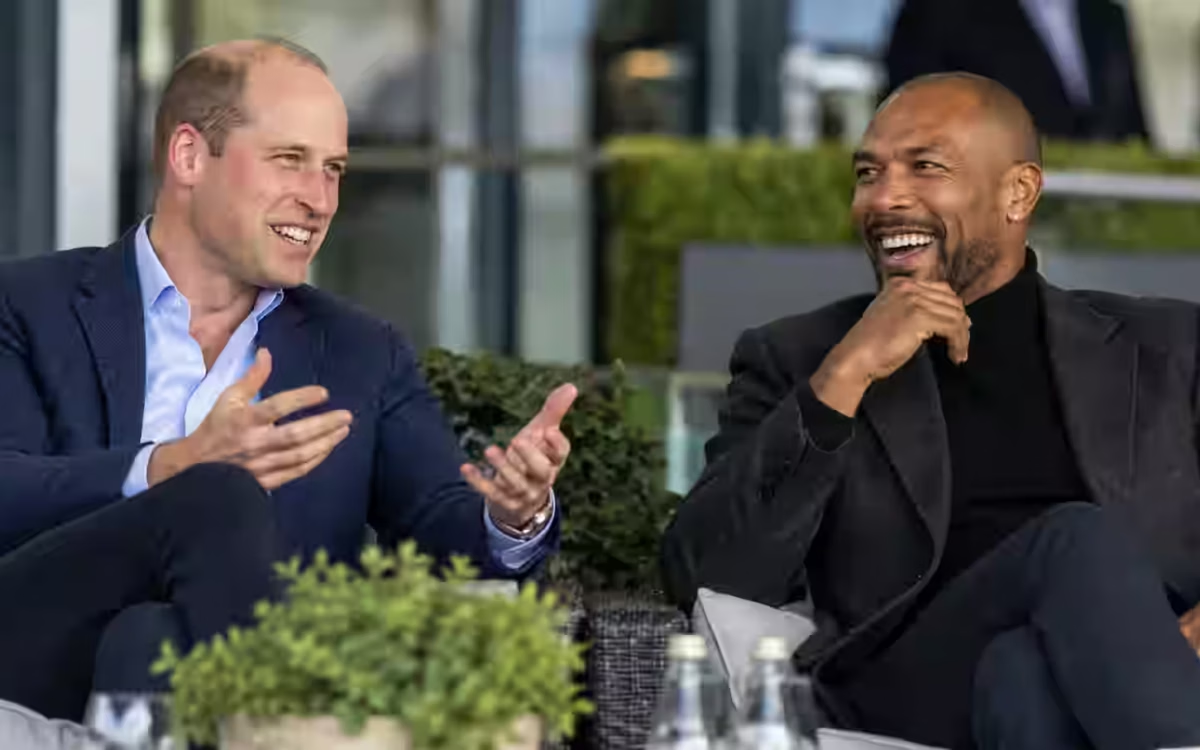
Table of Contents
Prince William’s passion for Aston Villa has become one of the most recognisable royal connections in English football, but the reason he supports the Birmingham club has little to do with family tradition or royal influence.
The Prince of Wales chose Aston Villa during his school years because he wanted a football team that offered excitement, unpredictability and a genuine emotional connection rather than the consistent success associated with the country’s biggest clubs.
His loyalty has since developed into a lifelong attachment, taking him from childhood football matches to European nights at Villa Park and, most recently, Aston Villa’s historic UEFA Europa League triumph in May 2026.
The 44-year-old royal was among the supporters celebrating in Istanbul when Unai Emery’s side defeated Freiburg 3-0 to secure their first major trophy in 30 years and their first European silverware since 1982.
For William, the victory represented far more than another successful sporting occasion. It was the culmination of decades spent following a club through relegation, disappointment, promotion and European success.
Why Did Prince William Choose Aston Villa?
Prince William first developed an interest in Aston Villa while attending school in Berkshire, where many of his friends supported Manchester United or Chelsea.
Rather than following the same clubs, he wanted a different football experience.
Speaking to BBC Sport in 2015, William explained that he deliberately looked for a team outside the traditional favourites because he wanted what he described as “more emotional rollercoaster moments”.
The decision reflected his desire to experience the uncertainty that comes with supporting a football club, including the disappointment of defeats and the excitement of unexpected victories.
Aston Villa’s history also influenced his choice. Founded in 1874, the Birmingham club had already established itself as one of England’s most historically significant football institutions, winning seven top-flight league titles and the European Cup in 1982.
Interestingly, William was born on 21 June 1982, just 26 days after Aston Villa defeated Bayern Munich to become European champions.
However, there is no evidence that Villa’s European Cup victory directly determined his choice of club. His own explanation places greater emphasis on the experiences he had with supporters and the friends who introduced him to the team.
One of the defining moments came when family friends took him to watch Aston Villa play Bolton Wanderers in the FA Cup in 2000.
William has recalled wearing a red beanie hat and sitting among Birmingham supporters, describing the atmosphere as an experience that made him feel connected to the club.
In a March 2025 interview with The Sun, he explained how the supporters’ singing, chanting and sense of community made him feel that he belonged.
That sense of belonging appears to have been the foundation of his loyalty.
Unlike supporters who inherit their allegiance from parents or relatives, William made a conscious decision to follow Aston Villa. His choice was subsequently strengthened by the friendships, memories and emotional experiences associated with the club.
Aston Villa’s European Success Has Made His Loyalty Even More Visible
The Prince of Wales has become an increasingly familiar figure at important Aston Villa matches, particularly since the club’s resurgence under manager Unai Emery.
In October 2024, William celebrated at Villa Park when Aston Villa secured a memorable 1-0 Champions League victory over Bayern Munich.
The result carried historical significance because Bayern were the same opponents Villa defeated in the 1982 European Cup final.
William’s celebrations attracted considerable attention, with the prince admitting afterwards that he had lost his voice.
His relationship with Aston Villa extends beyond watching matches from the stands.
Emery previously told CBS Sports that William had visited the club’s training ground even before its return to European competition.
The Spanish manager described the prince as a humble supporter and said the club appreciated his visits, which included watching training sessions and spending time with the squad.
Those comments offered an important insight into William’s relationship with Aston Villa. His interest has remained consistent during periods when the club was not enjoying international success.
The strongest demonstration came on 20 May 2026, when Aston Villa defeated Freiburg in the Europa League final in Istanbul.
Goals from Youri Tielemans, Emiliano Buendía and Morgan Rogers delivered a historic victory for Emery’s team.
William celebrated alongside other Villa supporters before congratulating the players and staff.
Afterwards, he shared his excitement on social media, describing the occasion as an amazing night and recognising the significance of ending the club’s 44-year wait for another European trophy.
Aston Villa captain John McGinn also spoke warmly about the prince’s involvement.
Speaking to TNT Sports after the final, McGinn described William as a passionate Villa supporter who had visited the dressing room before the match.
Defender Matty Cash confirmed that William joined the players for celebratory drinks after the victory.
The interactions demonstrated how the prince’s attachment to the club has developed into a relationship recognised by both the coaching staff and players.
Forward Morgan Rogers, reflecting on the historic achievement, told TNT Sports:
“We’ll go down in history.”
For William, that history had particular personal importance. He had spent years following the club through some of its most difficult periods before witnessing one of its greatest modern achievements.
Prince William Has Even Revealed His Matchday Superstitions
William’s connection to Aston Villa is not limited to public appearances.
During his 2025 interview with The Sun, the prince disclosed that he participates anonymously in online football forums, reading the opinions of fellow supporters and occasionally contributing his own views.
The revelation surprised some royal observers because it suggested that William engages with football discussions much like thousands of ordinary fans.
He has also admitted to having matchday superstitions.
When Villa are struggling during a televised match, William sometimes changes where he sits at home or moves his children into different positions in the hope of improving the team’s fortunes.
Although these rituals have no impact on results, they reflect the emotional investment that football supporters frequently develop.
His interest became particularly intense following Aston Villa’s relegation from the Premier League in 2016.
Rather than distancing himself during the club’s difficult Championship years, William continued following results and developments closely.
He has also spoken about the frustration of being unable to watch some Aston Villa matches on television because of the traditional Saturday 3pm broadcasting blackout.
For a royal whose official responsibilities can make travelling to Birmingham difficult, television coverage remains an important way of following the team.
That level of engagement challenges the perception that his support is primarily ceremonial or connected to high-profile European fixtures.
William has repeatedly demonstrated an interest in Aston Villa during less successful periods, strengthening the credibility of his longstanding allegiance.
Is Prince George Also an Aston Villa Supporter?
Prince William has increasingly shared his football enthusiasm with his eldest son, Prince George.
The pair have attended several important matches together, including Aston Villa’s Champions League quarter-final against Paris Saint-Germain in April 2025.
Speaking to TNT Sports before the match in Paris, William explained that taking George to a major European fixture was particularly meaningful because Aston Villa had waited so long to compete at that level.
Although PSG won the first leg 3-1, photographs showed father and son celebrating Morgan Rogers’ opening goal together.
William has previously acknowledged that he would naturally prefer his children to support Aston Villa but has said they should ultimately be free to choose their own football teams.
George, Princess Charlotte and Prince Louis have all been exposed to their father’s passion for the club, with Villa shirts among their football clothing.
However, that does not establish that all three children have independently chosen Aston Villa as their permanent football allegiance.
For William, attending matches with his children appears to represent an opportunity to create the same type of experiences that originally attracted him to football.
His memories of standing among Aston Villa supporters as a youngster are now being complemented by new experiences shared with the next generation of the royal family.
Beyond Aston Villa, William has maintained a broader role in English football. He served as president of the Football Association from 2006 and became its patron in 2024, succeeding the late Queen Elizabeth II in that position.
His official association with English football is separate from his personal loyalty to Aston Villa.
The distinction is important because his royal responsibilities require engagement with clubs and supporters across the country, while his preference for Villa remains a personal sporting attachment.
Ultimately, Prince William supports Aston Villa because he chose the club as a young football enthusiast and developed a lasting emotional connection with its supporters.
What began as a desire to avoid following the same teams as his schoolfriends has become a decades-long relationship shaped by friendships, matchday experiences and sporting highs and lows.
Aston Villa’s Europa League victory in 2026 has given that story a remarkable new chapter.
For a supporter who originally selected the club because he wanted unpredictable football and emotional moments, witnessing Villa become European champions again may have provided the most memorable moment of all
About the Journalist
Ben covers business, transport and global developments for Londoner. His reporting focuses on London’s economy, major companies, infrastructure, public transport and international stories that may affect people and businesses across the capital. He explains complex developments clearly using reliable sources and relevant context.