Incorrect Plumbing is Sending Sewage-contaminated Water Into London Rivers, Study Warns
 Published By
Olivia
Published By
Olivia
Published:
Updated:
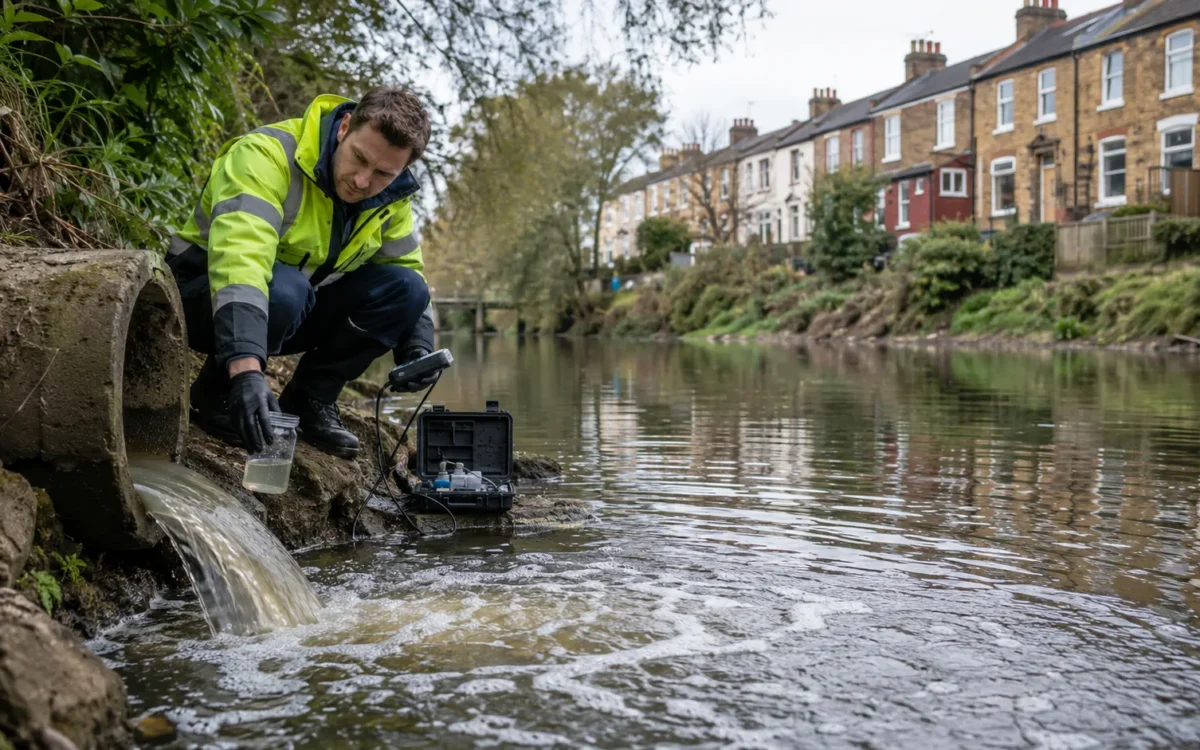
Incorrectly connected household plumbing is contributing to pollution in London waterways, with a recent study estimating that around 600 million litres of sewage-contaminated water could be entering the River Roding and its tributaries each year.
The research, led by environmental charities Thames21 and the River Roding Trust, identified sewer “misconnections” and faulty drainage infrastructure as major sources of pollution in the Lower Roding, which flows through north-east London before joining the Thames at Barking Creek.
A sewer misconnection occurs when wastewater from a toilet, sink, washing machine, dishwasher or other household plumbing is connected to a surface-water drain rather than the wastewater sewer.
Surface-water drains are generally designed to carry rainwater towards local streams and rivers. As a result, a misconnected appliance can send untreated wastewater directly into a waterway instead of to a sewage treatment works.
Thames Water says such connections can introduce wastewater and chemicals into rivers and streams, harming wildlife and the wider environment.
River Roding Study Finds Pollution Entering During Dry Weather
Researchers monitored more than 70 outfalls across the Lower Roding and its tributaries for six months, using citizen-science water-quality monitoring alongside measurements of water flow.
Thames21 said the findings indicate around 600 million litres of sewage-contaminated water could enter the system annually through unpermitted and previously unmonitored outfalls – roughly equivalent to 240 Olympic-sized swimming pools.
The charities also reported persistent discharges during dry weather. This is significant because rainfall cannot explain the flows and there is less rainwater available to dilute pollutants entering the river.
Cran Brook, a tributary running through the Redbridge area, was identified by the research as the most significant sewage pollution source detected in the Lower Roding.
However, incorrect plumbing is not the only issue affecting the brook.
The study linked its pollution to a combination of widespread sewer misconnections, faulty drainage infrastructure and leachate from a historic landfill site.
Redbridge Council says investigations have found high ammonia levels in Cranbrook Stream and that pollution has also been traced towards land at Fairlop Country Park that was used as a domestic landfill more than 50 years ago.
The findings come amid wider scrutiny of environmental policy across east London, including debate over local responses to the climate emergency in Havering.
Authorities Begin Work on Misconnections
Action to identify and correct some of the drainage problems is already under way.
The Environment Agency said in June that rectification work had started on misconnections in a priority area around Cran Brook and Valentines Park.
It said it works with Thames Water to investigate polluting outfalls and to direct the company’s Surface Water Outfall Programme, which traces potential misconnections.
Redbridge Council, meanwhile, says it has appointed a specialist to assess pollution linked to the historic landfill, including water quality and flow rates, while working with the Environment Agency and Thames Water on a longer-term response.
Thames Water told ITV News London in August that its investigation of the wider Roding catchment could take up to a year.
The company said it had identified pollution across a large part of the catchment and that the majority of cases it had found were linked to misconnections on private properties.
Responsibility for correcting a plumbing misconnection on private property generally falls to the property owner, according to Thames Water.
The problem also extends beyond the River Roding. A 2025 London Assembly report on improving the capital’s waterways called for action to reduce pollution from both sewer overflows and misconnections and recommended support for a dedicated misconnections officer to help councils accelerate enforcement.
For London’s smaller rivers and tributaries, the findings underline an important distinction in the debate over sewage pollution: contamination can reach waterways not only through water-company sewer overflows, but continuously through incorrectly connected private plumbing and other drainage faults.
The issue forms part of a broader environmental challenge for households and councils across the capital, alongside questions around waste, drainage and local recycling practices in London.
About the Journalist
Olivia covers London life, culture and lifestyle for Londoner. Her work includes food, shopping, neighbourhood trends, attractions, local experiences and practical guides for residents and visitors. She focuses on engaging stories that reflect everyday life across the capital.