Kaboodle Kitchen Appliance Supplier Closure: What Happened and What Customers Need to Know
 Published By
Henry
Published By
Henry
Published:
Updated:
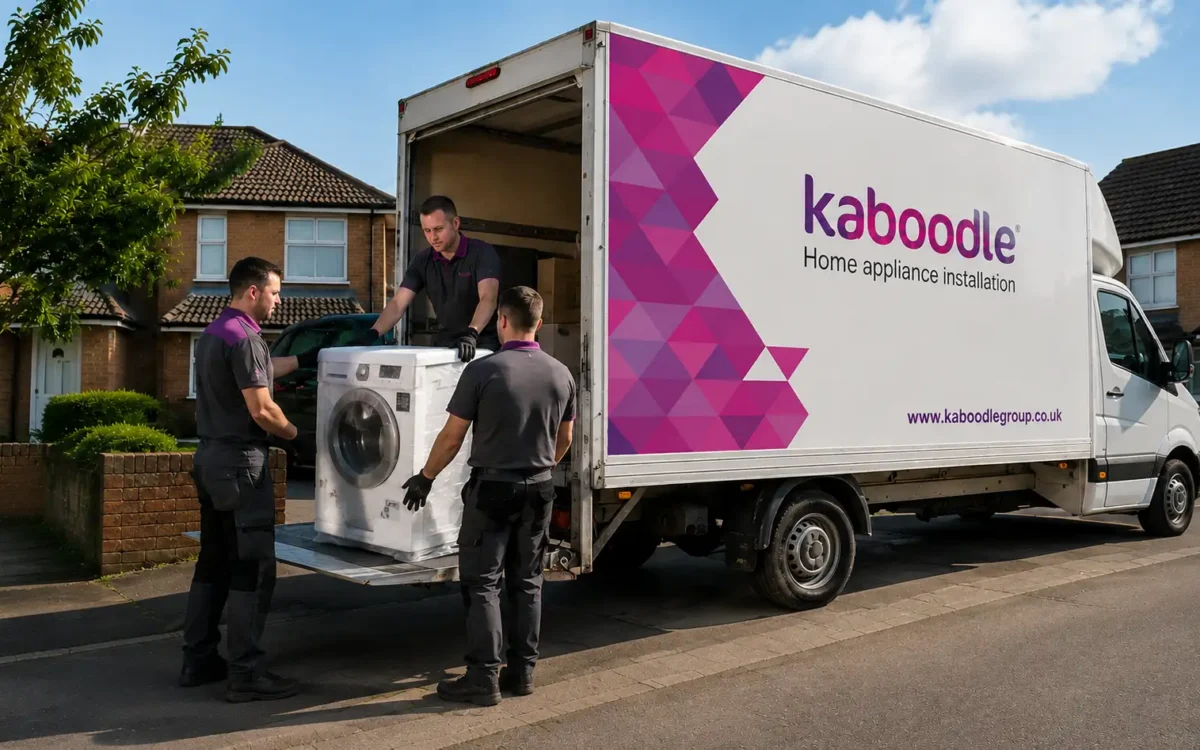
Table of Contents
The Kaboodle kitchen appliance supplier closure has drawn attention across the UK kitchen, home appliance and installation sectors after Kaboodle Limited stopped trading in May 2026.
Kaboodle Limited supplied home appliances and provided installation services to retailers, manufacturers and other customers across the UK. The business announced that it was ceasing trading with immediate effect after experiencing significant cash-flow pressures, with insolvency specialists subsequently appointed to place the company into creditors’ voluntary liquidation.
The closure affected employees, commercial partners, suppliers and customers who may have had appliances, installations, outstanding payments or stock connected with the company.
Official records now show Kaboodle Limited as being in liquidation. The Companies House record for Kaboodle Limited lists the company, number 05908201, with a current status of “Liquidation”.
Kaboodle Closure at a Glance
| Detail | Information |
| Company | Kaboodle Limited |
| Company number | 05908201 |
| Business | Appliance supply, delivery and installation services |
| Trading stopped | Early May 2026 |
| Reason given | Cash constraints |
| Liquidation type | Creditors’ Voluntary Liquidation |
| Liquidators appointed | 18 May 2026 |
| Insolvency firm | BRI Business Recovery and Insolvency |
| UK locations reported | Stevenage, Leeds, Highbridge, Basingstoke and Telford |
| Current Companies House status | Liquidation |
| Original stock collection deadline | 8 May 2026 |
What Happened to Kaboodle Limited?
Kaboodle Limited ceased trading at the beginning of May 2026 after the business ran into financial difficulties.
Industry publication KBBFocus reported on 1 May 2026 that the kitchen appliance supply and installation specialist had announced its immediate closure because of “cash constraints”. The company said insolvency practitioners at BRI Business Recovery and Insolvency had been instructed to assist with placing it into creditors’ voluntary liquidation.
However, it is useful to distinguish between the date Kaboodle stopped trading and the date the formal liquidation appointment took effect.
According to official notices published through The Gazette’s insolvency records, Kaboodle Limited entered creditors’ voluntary liquidation and joint liquidators Thomas Edward Guthrie and Bethan Bryant of BRI Business Recovery and Insolvency were appointed on 18 May 2026.
Companies House subsequently recorded the appointment of a voluntary liquidator, the winding-up resolution and a statement of affairs on 29 May 2026.
Therefore, the most accurate description is that Kaboodle ceased trading in early May 2026 before formally progressing into creditors’ voluntary liquidation later that month.
Why Did the Kaboodle Kitchen Appliance Supplier Close?
Cash-flow problems were identified as the principal reason behind the Kaboodle kitchen appliance supplier closure.
Kaboodle commercial director David Simpson said the company was being liquidated as a result of cash constraints. He also explained that the business had previously been restructuring its operations in order to concentrate more heavily on the home installation market.
The company had been moving away from its housebuilder activities as part of that restructuring.
Reports based on Kaboodle’s statement said the company claimed that most housebuilder customers had cooperated in clearing debts, but that a major unnamed customer had failed to settle substantial sums relating to goods and services. Kaboodle connected those outstanding payments to the cash-flow pressures that eventually contributed to the company’s failure.
Because the customer was not publicly identified in the reliable sources reviewed, claims about the identity of the company involved should be treated cautiously.
Cash Flow Can Be Critical for Installation Businesses
Businesses involved in appliance supply and installation can incur substantial costs before receiving payment.
They may have to finance:
- appliance purchases;
- warehouse operations;
- delivery fleets;
- fuel and transport;
- engineers and installation teams;
- insurance;
- property costs;
- stock management; and
- administrative expenses.
When significant commercial customers delay or fail to make payments, working-capital pressure can therefore become severe.
That does not mean unpaid invoices alone necessarily explain every aspect of Kaboodle’s insolvency. The company’s own public explanation highlighted cash constraints and outstanding debts, while the formal insolvency process is responsible for dealing with the company’s financial affairs.
What Did Kaboodle Limited Do?
Kaboodle was primarily a business-to-business appliance supply, logistics and installation company rather than a conventional high-street kitchen retailer.
The company worked with manufacturers and retailers to provide appliances and installation services to households around the country. Industry reporting described its operations as spanning appliance supply and home installation.
This distinction helps explain why many ordinary consumers may not immediately recognise the Kaboodle name even if the company had been involved in delivering or installing an appliance in their home.
Official Companies House records show Kaboodle Limited was incorporated on 16 August 2006. It originally traded under the registered name Kitchen Appliance Installation Limited before changing its name to Kaboodle Limited in February 2017.
Some industry reports describe the wider business as operating since 2005. The Companies House incorporation date for the legal entity now in liquidation is nevertheless August 2006.
Which Kaboodle Locations Were Affected?

Kaboodle operated through a network of UK sites supporting its appliance distribution and installation services.
Industry reports identified five locations:
- Stevenage;
- Leeds;
- Highbridge;
- Basingstoke; and
- Telford.
The Gazette lists the company’s principal trading address as Unit 5b Motorway Industrial Estate, Babbage Road, Stevenage, Hertfordshire, SG1 2TU.
Its registered office has since been changed to 100 St James Road, Northampton, NN5 5LF, which is also the address appearing on the current Companies House record.
What Happened to Stock Held by Kaboodle?
One of the most urgent consequences of the closure concerned stock that remained at Kaboodle sites.
Customers and other parties with goods being held by the company were initially asked to arrange collection by 8 May 2026. Reports at the time explained that Kaboodle was no longer able to continue storing inventory following the cessation of trading.
That deadline has now passed.
Anyone who believes they still own appliances or other goods previously held at a Kaboodle facility should therefore not simply arrive at one of its former depots.
They should instead establish whether the goods remain identifiable and contact the insolvency practitioners dealing with Kaboodle Limited.
The Gazette identifies BRI Business Recovery and Insolvency as the firm handling the creditors’ voluntary liquidation.
Proof of ownership could become particularly important where physical goods are concerned. Relevant documents might include purchase invoices, order confirmations, serial numbers, contracts and correspondence identifying particular appliances.
What Should Customers Do If Kaboodle Owes Them Money?
A customer who paid Kaboodle directly for goods or services that were never supplied may have become a creditor of the company.
The correct action can depend on how payment was made and the contractual relationship involved.
Government guidance explains that when an insolvency practitioner is dealing with a company in voluntary liquidation, creditors who have not already been contacted should contact that insolvency practitioner regarding their claim.
Consumers can read the government’s guidance for creditors of insolvent companies for further information.
Becoming a creditor does not guarantee that all money will be recovered. Payments depend on the assets available in the liquidation and the statutory order in which different classes of creditors are paid.
Can Customers Use Section 75?
Some consumers may have another route if they paid for undelivered goods or services using a credit card.
Under Section 75 of the Consumer Credit Act, qualifying credit-card purchases costing more than £100 and up to £30,000 can give consumers protection where the supplier breaches its contract or fails to provide what was purchased.
MoneyHelper explains that the credit-card company can share responsibility with the seller in qualifying circumstances, including situations where a company goes out of business without supplying the promised goods or services.
Consumers can check the eligibility requirements through MoneyHelper’s Section 75 and chargeback guidance.
The rules depend on the precise transaction, so consumers should avoid assuming that every card payment will automatically qualify.
What About Debit Card Payments?

Debit-card payments are not covered by Section 75.
However, a customer may be able to ask their card provider about chargeback.
Citizens Advice says consumers who paid a company that has subsequently gone out of business may be able to pursue chargeback through their bank or card provider, depending on the payment method and circumstances.
Its guidance on what to do when a company stops trading also recommends registering as a creditor where money remains outstanding.
Chargeback is different from the statutory protection offered by Section 75, and a successful refund is not guaranteed.
Customers should therefore contact their bank or payment provider promptly and retain evidence such as invoices, bank statements, order confirmations and correspondence.
What Happens to Appliance Warranties?
The impact on warranties depends heavily on who issued the warranty.
If a warranty was provided directly by the appliance manufacturer rather than Kaboodle, the manufacturer’s guarantee may potentially continue despite Kaboodle Limited having ceased trading.
Customers should check:
- the manufacturer shown on the appliance;
- the model and serial number;
- the original purchase documents;
- whether the warranty was issued by Kaboodle, the retailer or the manufacturer; and
- whether any third-party extended warranty was purchased.
A manufacturer’s warranty should not automatically be assumed to have disappeared simply because the distributor or installer has entered liquidation.
The position may be more complicated where a guarantee related specifically to installation work carried out by Kaboodle.
Consumers with unresolved faulty-product or installation problems can consult the relevant Citizens Advice guidance for businesses that have stopped trading.
What Does the Closure Mean for Retailers and Manufacturers?
The effects of the Kaboodle closure extend beyond individual household customers.
Retailers and appliance manufacturers that previously relied on Kaboodle for nationwide delivery and installation may need to move those operations to alternative logistics and installation providers.
This can involve more than simply finding another delivery company.
Integrated appliance installation may require:
- appropriately trained installers;
- regional distribution capability;
- delivery scheduling technology;
- customer-service infrastructure;
- removal of old appliances;
- connection and testing procedures;
- regulatory and safety compliance; and
- sufficient capacity to handle nationwide volumes.
For businesses that had substantial volumes passing through Kaboodle, changing providers could therefore create operational disruption in addition to any direct financial exposure arising from the liquidation.
What Does the Closure Mean for Kaboodle Employees?
The company’s failure also affected its workforce.
When the closure was announced, Kaboodle’s commercial director acknowledged the impact on employees and described the insolvency as a distressing situation. The company also said the collapse had resulted in the loss of dozens of livelihoods.
Employees of insolvent companies can have certain statutory rights relating to unpaid wages, holiday pay, notice pay and redundancy.
The UK Government operates a dedicated process through which eligible former employees of insolvent businesses can claim redundancy and other money owed by an employer.
Eligibility and payment limits depend on individual circumstances.
What Is Creditors’ Voluntary Liquidation?

Creditors’ voluntary liquidation, commonly shortened to CVL, is a formal insolvency procedure used when a company can no longer continue because it is unable to pay its debts.
A liquidator is appointed to take control of the company’s affairs.
The process can include:
- identifying company assets;
- realising or selling those assets;
- examining liabilities;
- dealing with creditor claims;
- investigating relevant company affairs;
- distributing available money according to statutory priorities; and
- eventually bringing the company’s legal existence to an end.
For Kaboodle Limited, The Gazette records the appointment of Thomas Edward Guthrie and Bethan Bryant of BRI Business Recovery and Insolvency as joint liquidators on 18 May 2026.
Companies House currently continues to show Kaboodle Limited’s status as Liquidation, rather than dissolved.
That distinction is important: the company has stopped trading, but the formal process of dealing with its assets, debts and creditors continues.
Kaboodle Closure Timeline
1 May 2026 – Closure Reported
Kaboodle announced that it had ceased trading with immediate effect because of cash constraints, with BRI instructed to assist with the proposed creditors’ voluntary liquidation.
8 May 2026 – Initial Stock Deadline
Customers and commercial parties with stock held by Kaboodle were initially urged to arrange collection by 8 May.
18 May 2026 – Liquidators Appointed
The formal appointment of the joint liquidators took place on 18 May 2026.
29 May 2026 – Insolvency Documents Filed
Companies House recorded the appointment of the voluntary liquidators, the winding-up resolution and Kaboodle’s statement of affairs.
June 2026 – Registered Office Changed
The company’s registered office was changed to 100 St James Road, Northampton.
August 2026 – Company Remains in Liquidation
As of August 2026, the official Companies House record continues to list Kaboodle Limited as being in liquidation.
Is This the Same as Kaboodle Kitchen in Australia?
No. This is an important distinction because search results for “Kaboodle Kitchen” can refer to a completely different business.
The insolvent company discussed in this article is Kaboodle Limited, company number 05908201, a UK appliance supply and installation business.
It should not be confused with the Kaboodle Kitchen cabinetry brand sold through Bunnings in Australia and New Zealand.
The Australian company’s official information says Kaboodle Kitchen is owned by Australian Homeware Enterprises and that its kitchen products continue to be available through more than 350 Bunnings stores across Australia and New Zealand.
Consumers looking for information about that separate brand can visit the official Kaboodle Kitchen information page.
There is currently no basis for interpreting the UK Kaboodle Limited insolvency as the closure of the Australian Kaboodle Kitchen business.
Does the Kaboodle Closure Reflect Wider Pressure on the Kitchen Industry?
Kaboodle’s closure provides another example of how vulnerable supply and installation businesses can become when cash flow deteriorates.
The kitchen and home-improvement supply chain often involves substantial expenditure occurring before businesses receive full payment. Appliances must be purchased, warehoused and transported while labour, vehicles and installation capacity also have to be funded.
Kaboodle’s own explanation particularly emphasised its cash constraints, the restructuring of the company towards home installation and difficulties recovering money it said was owed by a significant housebuilder customer.
It would therefore be misleading to suggest that the insolvency proves that the entire UK kitchen or appliance industry is in crisis.
Instead, the closure demonstrates the potential consequences when tight margins, major customer exposure and working-capital pressures combine.
What Should Someone Affected by the Kaboodle Closure Do Now?
Anyone financially affected should first establish exactly what relationship they had with Kaboodle.
Useful steps include:
- Gathering documentation – Keep invoices, contracts, receipts, payment records, emails and appliance details.
- Checking the official insolvency record – The Companies House entry confirms Kaboodle Limited’s current liquidation status.
- Contacting the insolvency practitioner – Customers or businesses owed money should establish whether they have been recorded as creditors.
- Checking payment protection – Consumers who paid by credit card should investigate Section 75 where applicable, while debit-card customers can ask their bank about chargeback.
- Checking manufacturer warranties – Where an appliance has already been supplied, determine whether its warranty comes directly from the manufacturer.
- Avoiding unverified claims – Social media speculation about the causes of the insolvency or companies allegedly responsible should not be treated as established fact without supporting evidence.
Conclusion
The Kaboodle kitchen appliance supplier closure brought an established UK appliance supply and installation operation to a sudden end in May 2026.
Kaboodle initially stopped trading because of what it described as cash constraints. The business subsequently entered creditors’ voluntary liquidation, with BRI Business Recovery and Insolvency appointed to manage the process.
For affected customers, suppliers and other creditors, the priority is now to retain evidence of any outstanding money or goods and deal through the appropriate insolvency and payment-protection channels.
Official Companies House records remain the strongest source for checking the company’s legal status, while The Gazette confirms the formal liquidator appointments.
Frequently Asked Questions About the Kaboodle Kitchen Appliance Supplier Closure
Has Kaboodle Limited Closed Permanently?
Kaboodle Limited stopped trading in May 2026 and subsequently entered creditors’ voluntary liquidation. Companies House currently lists the company’s status as Liquidation.
When Did Kaboodle Stop Trading?
The closure was publicly reported at the beginning of May 2026, with Kaboodle announcing that it had ceased trading with immediate effect.
When Did Kaboodle Officially Enter Liquidation?
Joint liquidators were formally appointed on 18 May 2026, according to The Gazette.
Why Did Kaboodle Close?
The company cited cash constraints. It also claimed that unpaid sums from a major housebuilder customer contributed to its financial difficulties.
Who is Handling the Kaboodle Liquidation?
BRI Business Recovery and Insolvency is handling the liquidation, with Thomas Edward Guthrie and Bethan Bryant appointed as joint liquidators.
Can Customers Get Their Money Back?
Recovery depends on the customer’s circumstances. They may be able to register as a creditor, pursue Section 75 protection for qualifying credit-card transactions or request chargeback where appropriate. None of these routes automatically guarantees full recovery.
Is Kaboodle Kitchen Australia Closing?
There is no evidence that the separate Australian Kaboodle Kitchen brand is affected by the UK liquidation. Its official website continues to describe its products as available through Bunnings stores in Australia and New Zealand.
What Should Businesses Owed Money by Kaboodle Do?
Businesses should retain evidence of the debt and communicate with the appointed insolvency practitioners about submitting their creditor claim. Government guidance explains that the amount eventually recovered depends on available assets and creditor priority.
It is also important to distinguish the failed UK company from the unrelated Kaboodle Kitchen brand operating through Bunnings in Australia and New Zealand. As of August 2026, the UK Kaboodle Limited remains in liquidation, while the formal insolvency process continues.
About the Journalist
Henry is the editorial head and lead author at Londoner. He oversees the publication’s editorial direction, article quality, source verification and corrections process. He also reviews major stories before publication to ensure they meet Londoner’s standards for accuracy, fairness and transparency.