16-17 Saver Railcard Changes: What Changes From August 2026?
 Published By
Adam
Published By
Adam
Published:

Table of Contents
From 17 August 2026, eligible 16 and 17-year-olds will get a full 12 months of validity from a newly purchased 16-17 Saver Railcard. Turning 18 during that period will no longer cause the Railcard to expire early, helping some young travellers keep their 50% fare discount for longer.
The government has confirmed a significant update to the 16-17 Saver rules ahead of the 2026–27 academic year, aimed at removing a long-standing disadvantage for young people whose 18th birthday falls shortly after buying the Railcard.
Until now, the value of the Railcard could depend heavily on a person’s birthday. Someone buying it at 17 could lose access to the discount on turning 18, meaning two students of a similar age could receive very different periods of discounted travel.
The new arrangement changes that position by focusing on the Railcard’s purchase date rather than ending eligibility at the holder’s 18th birthday. For students, apprentices and young workers who commute regularly, this could provide several additional months of lower rail fares and make travel costs easier to plan across the academic year.
What Are the New 16-17 Saver Railcard Changes?

The central change concerns the Railcard’s expiry date.
| Rule | Before 17 August 2026 | From 17 August 2026 |
| Who can buy it? | Eligible 16 and 17-year-olds | Eligible 16 and 17-year-olds |
| Rail fare discount | 50% on most eligible fares | 50% on most eligible fares |
| Standard validity | Up to one year | Full year from purchase |
| What happens at age 18? | Railcard normally expires | Existing Railcard remains valid until its stated expiry date |
| Effective date | Existing rules | 17 August 2026 |
The change does not mean that anyone aged 18 can simply buy a new 16-17 Saver. Eligibility to purchase the Railcard remains focused on people aged 16 and 17. What changes is how long a qualifying Railcard can remain valid after it has been purchased.
That distinction is particularly important for students who turn 18 shortly after beginning a college or training year.
Why Is the Railcard Rule Changing?
Under the previous system, two students of a similar age could receive substantially different periods of discounted travel simply because their birthdays fell at different points in the academic year.
The Department for Transport says more than 70,000 young people a year were prevented from receiving the maximum available discount because their Railcards expired when they turned 18. Those affected were calculated to be an average of £175 worse off than peers able to use the discount for longer.
The change therefore removes what had effectively become a birthday cut-off during the academic year.
It arrives alongside wider government measures aimed at reducing transport costs. Another change affecting younger travellers and households is the planned £2 bus fare cap across England outside London, which is due to take effect from January 2027.
How Much Does the 16-17 Saver Railcard Save?
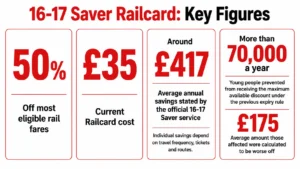
The 16-17 Saver provides 50% off most eligible rail fares, including Standard Anytime, Off-Peak, Advance and eligible Season tickets.
The Railcard currently costs £35. The official 16-17 Saver service states that average annual savings can reach around £417, although individual savings depend heavily on how frequently someone travels, the tickets purchased and the routes used.
For example, someone spending £40 a week on qualifying tickets before the discount could theoretically reduce the eligible fare to around £20. Actual ticket prices and restrictions should always be checked for the particular journey rather than assuming every fare will be halved.
Passengers can check the current benefits and conditions through the official 16-17 Saver website.
What Happens If Someone Turns 18 After 17 August?
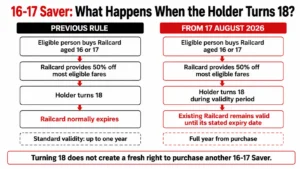
This is where the new rule has the greatest effect.
Consider a 17-year-old who buys an eligible 16-17 Saver on 1 September 2026 and turns 18 in December.
Under the previous arrangement, the Railcard would normally have stopped being valid around the person’s 18th birthday. Under the new system, a qualifying Railcard bought after the changes take effect can continue for its full one-year validity period instead.
That could allow the student to keep receiving eligible half-price rail fares well beyond their 18th birthday and potentially throughout much more of the academic year.
Importantly, turning 18 does not create a fresh right to purchase another 16-17 Saver. The extension applies to the validity of an eligible Railcard already bought while the customer qualifies.
Do Existing Railcard Holders Automatically Get the Extension?
Passengers should check the expiry date attached to their individual Railcard rather than assuming an existing card has automatically received another year.
The government specifically states that from 17 August 2026, 16-17 Saver Railcards will become valid for a full year from purchase. Travellers buying or renewing around the transition should therefore check the conditions shown during the purchase process and on the issued Railcard.
Some official Railcard FAQ pages may temporarily continue showing the previous rule before the new arrangements take effect, under which validity ended after one year or at the holder’s 18th birthday, whichever occurred first.
For the latest position, the government’s 16-17 Saver Railcard changes announcement provides the effective date and new validity rule.
Can the 16-17 Saver Be Used Everywhere in Britain?
The Saver can be used for eligible fares across participating National Rail services, but passengers should not assume it covers every train or ticket.
Current Railcard information says discounted tickets can be used with English and Welsh train operating companies and on qualifying cross-border services into Scotland. The published conditions exclude ScotRail and Caledonian Sleeper services from the standard discount arrangements.
Ticket restrictions should therefore be checked before buying, particularly for journeys involving Scotland or unusual fare products.
What Should Students and Parents Do Before September?
Anyone expecting to rely on rail travel for school, sixth form, college, an apprenticeship or work should check their eligibility and likely travel costs before the new academic year begins.
A useful sequence is to confirm the passenger’s age when purchasing, compare discounted single or return tickets with Season ticket options, check the Railcard’s actual expiry date and make sure the Railcard is available when travelling.
Passengers should also compare rail costs with alternative local transport. London operates its own Transport for London fare system, while the government’s planned national £2 bus cap applies to participating services outside London, rather than TfL buses.
What Is the Most Important Change?
The key point is simple: from 17 August 2026, turning 18 will no longer automatically end the validity of a qualifying 16-17 Saver Railcard.
A Railcard bought while the passenger is eligible can instead remain valid for a full year from its purchase date.
For students whose 18th birthday falls early in an academic year, that could mean several additional months of access to eligible half-price rail fares. The government estimates that the previous expiry rule affected more than 70,000 young people each year, making the change particularly relevant to families budgeting for education, training and commuting costs.
About the Journalist
Adam reports on London news, events and local developments. His coverage includes festivals, exhibitions, public announcements, community stories and important updates affecting people across the city. He aims to provide timely and accessible reporting on what is happening in London.